This shop was built from one message.
Olmo Ceramica isn't a real shop. We sent one message to Claude Code with this plugin installed. It set up a Shopify store, wrote three designs, and built every page below. A person answered its questions and picked a design.
/plugin marketplace add itsmylife44/shopify-theme-builder
/plugin install shopify-theme-builder@shopify-theme-builderA free, MIT-licensed Claude Code plugin. For Codex, Cursor or OpenCode: npx skills add itsmylife44/shopify-theme-builder
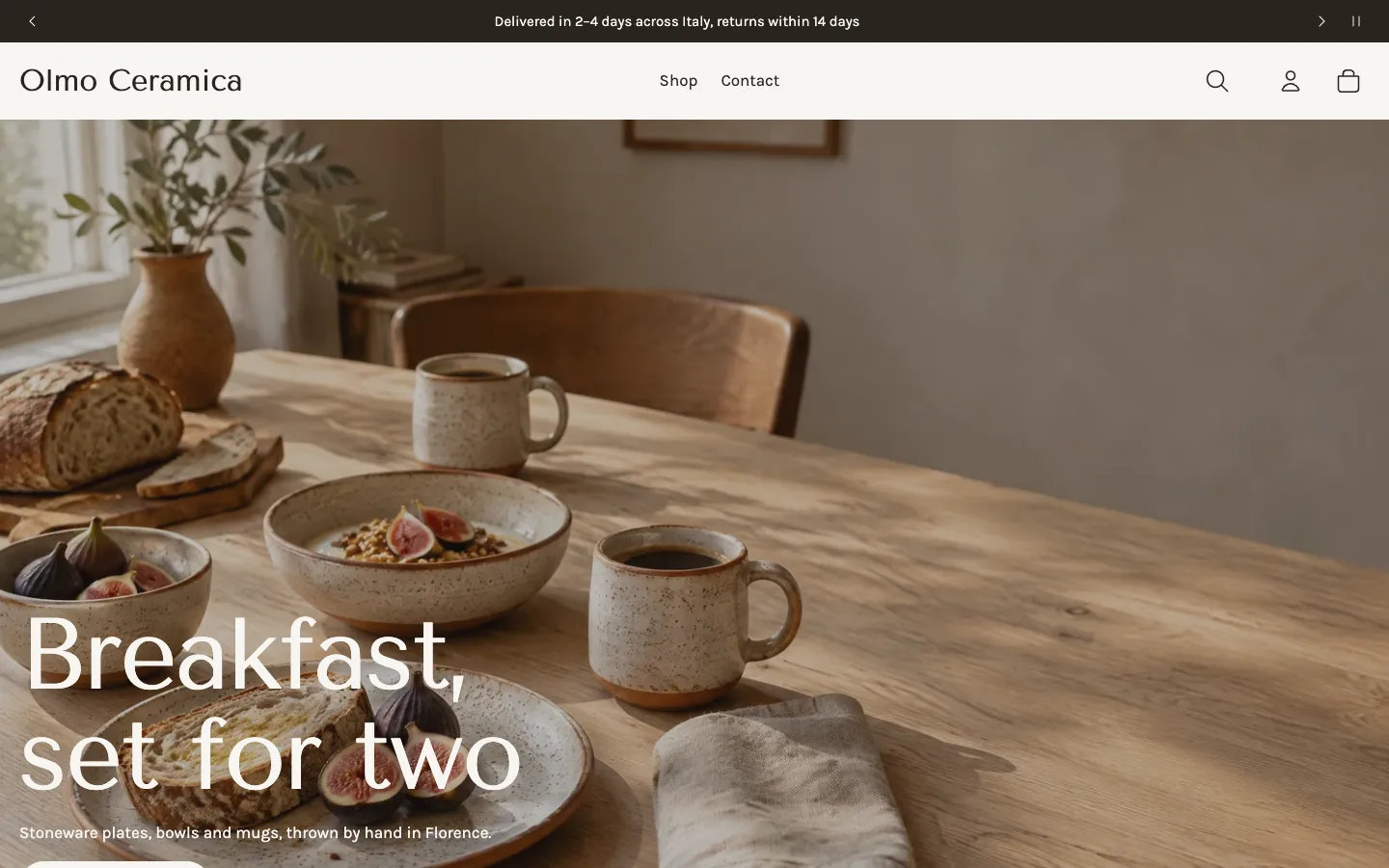
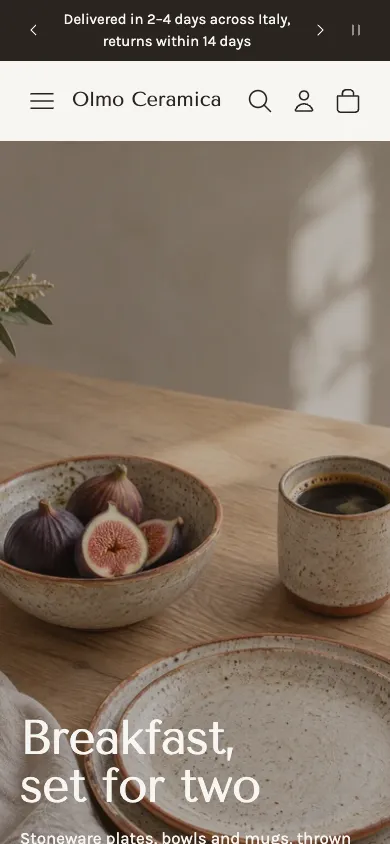
- The heading and every line of copy, written from the brief in the chosen design's voice.
- A photo from the brief, uploaded to the shop's Files and placed where its content fits.
- Delivery and returns, from the buying facts the owner confirmed. Nothing invented.
- The menus, written into the store through Shopify's Admin API.
The message
Sent as is. What the agent can't guess, it asks, and it reads the brief back before designing anything.
Use the shopify-theme-builder skill to build a Shopify theme for my shop.

Shop: Olmo Ceramica, handmade stoneware tableware from a two-person studio in Florence.
Reference: https://olmoceramica.example — take our colors, fonts and logo from there.
Keep: our terracotta #B5552D and our logo. Everything else is open.
Photos: ~/Desktop/olmo-photos (the studio, the kiln, table settings, products on white).
Customers: people setting up a first home who'd rather buy fewer, better things.
It should feel: calm, warm, handmade. Not glossy luxury, not rustic kitsch.
Inspiration outside ceramics: Japanese cookbook layouts, Kinfolk magazine.
Store: we don't have one yet, create a development store in Italy.
Selling: Italy and the rest of the EU, in English (the default) and Italian, prices in EUR including VAT.
Buying facts: shipping €6.90, free over €80, 2–4 days in Italy, returns within 14 days.What happened next
- Store. Created a free development store in Italy, in euros with VAT included, then wrote the menus and enabled Italian.
- Questions. One form with the store setup, the admin steps only the owner can do, and the brief to confirm.
- Photos. Uploaded the six photos to the shop's Files and noted what each one shows.
- Three designs. Wrote three Directions, each with its own home page, fonts, colors, shapes and motion, live on the store.
- The choice. The person pressed Choose on one. The agent carried on by itself: product, collection, cart, search and 404 pages, and all the copy.
- Review. Screenshots at desktop and phone widths, one fix round, then PASS: Theme Check clean and zero findings on six axe and keyboard checks.
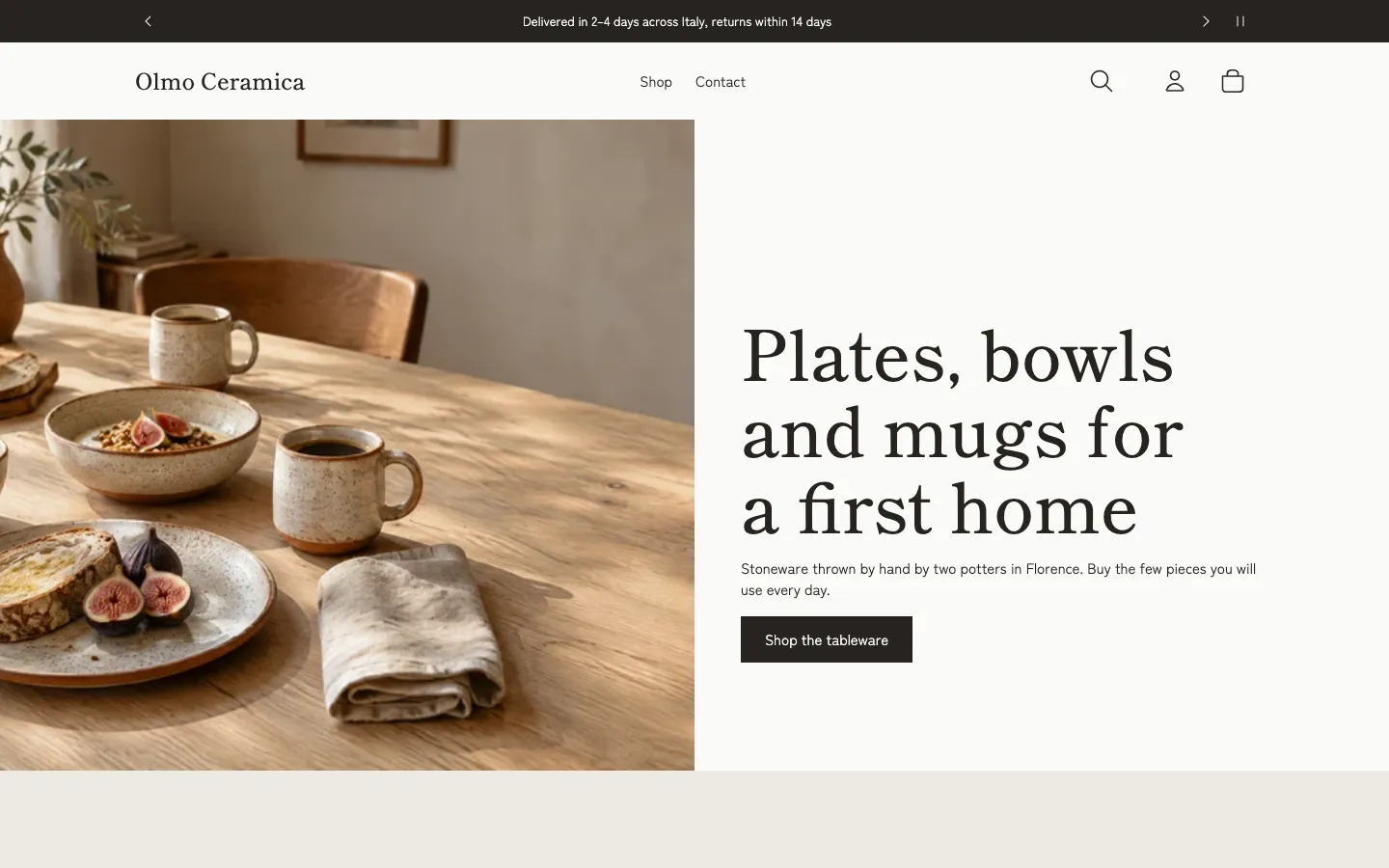
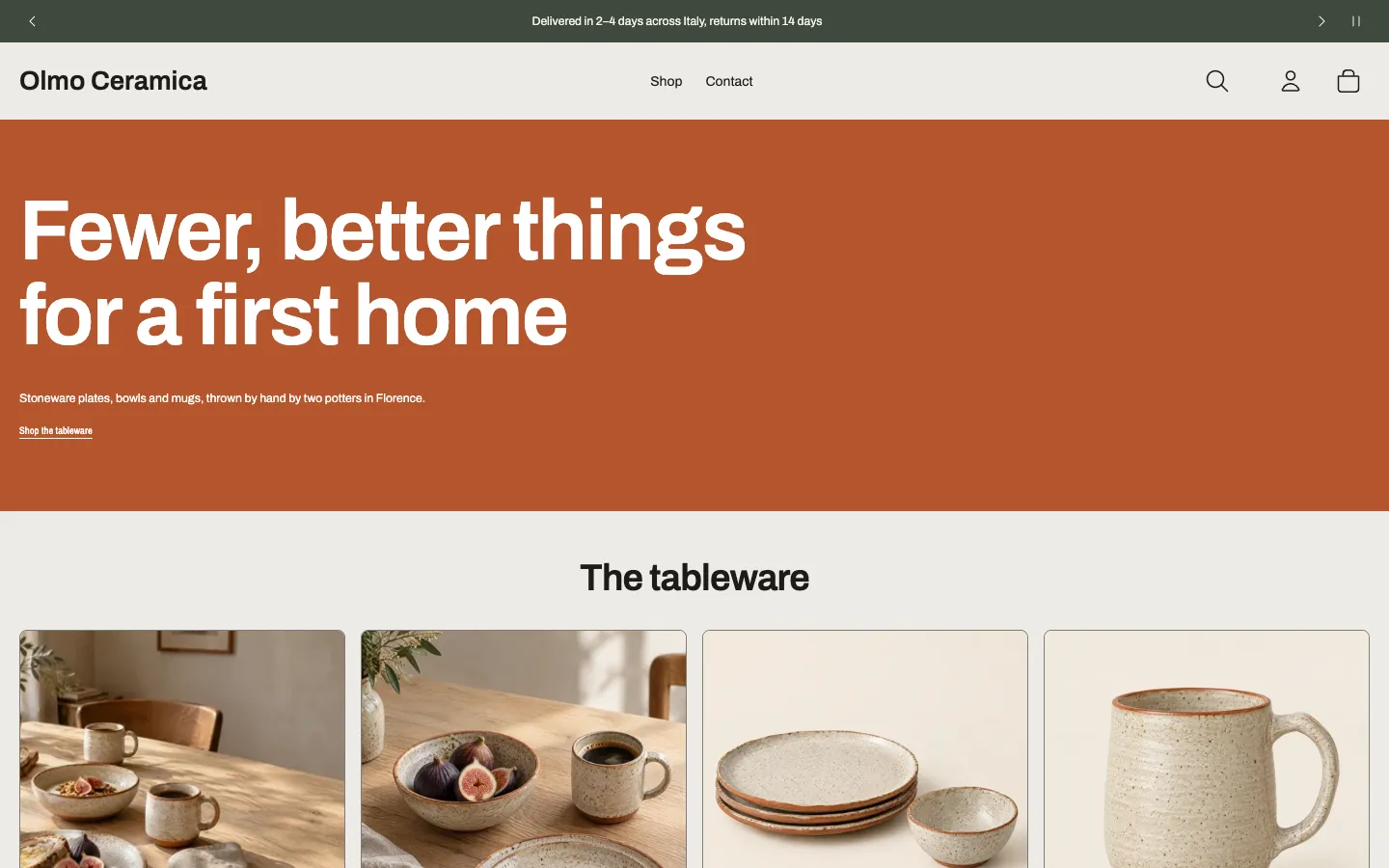
Three designs from the same message
Not one guess. Each Direction commits to its own type, color strategy, shape, spacing and home page, and names what it refuses. The person compared them live and chose one.
Every page, not just the home
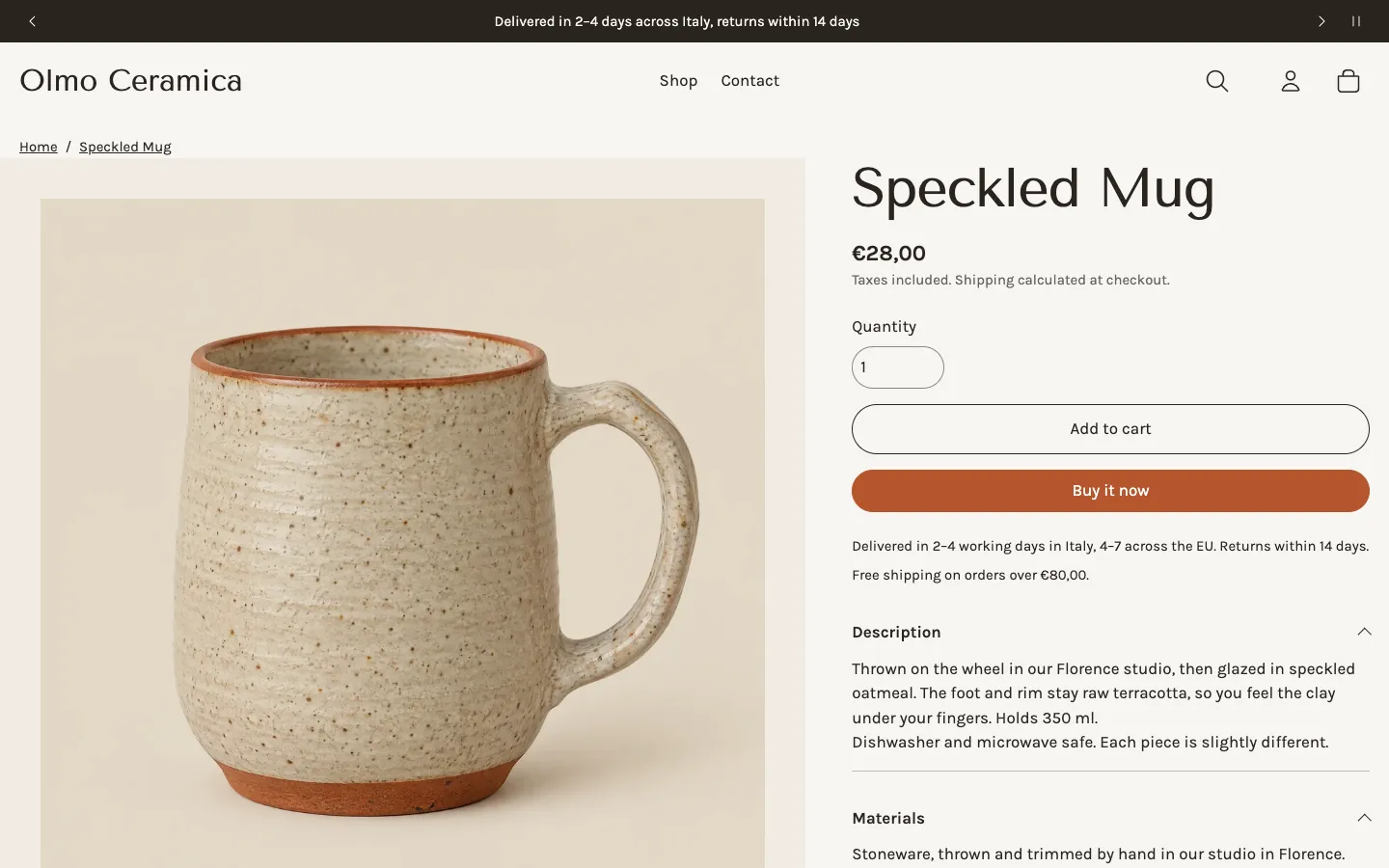
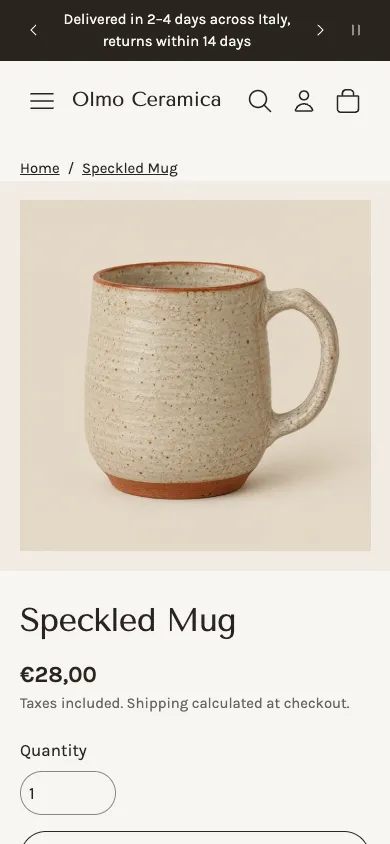
- Prices with VAT included, as decided at setup, and checked again at hand-off.
- Delivery times, returns and the free-shipping threshold, only as confirmed.
- Product photos framed on a tint, as the chosen design's media rule says.
The Studio
A local app next to your agent. It shows the real theme, rendered by Shopify, and writes every change into the theme's files, where the agent sees it too.
- Switch the preview between the three Directions, then choose.
- Click any section to edit its text, colors, layout, products and links.
- Undo, save a Git checkpoint, download the zip Shopify takes.
What it checks before handing over
- Theme Check
- After every change. Zero errors before anything is handed over.
- Contrast
- Every color scheme: text 4.5:1, borders and buttons 3:1.
- Design checker
- No placeholders, no leftover example text, a real type hierarchy, one h1 per page.
- Accessibility
- axe-core WCAG 2.2 A and AA, plus a keyboard pass through the menu, cart drawer and quick add, at desktop and phone widths.
- Lighthouse
- At delivery, against the Theme Store's bars: performance 60, accessibility 90.
- Publishing
- Never. The theme is uploaded unpublished; publishing is the owner's call.
Build yours
/plugin marketplace add itsmylife44/shopify-theme-builder
/plugin install shopify-theme-builder@shopify-theme-builderThen send your own version of the message. You need Node.js 22.12+, Git, the Shopify CLI and Chrome; the agent checks them first. No store? It creates a free development store.
Questions
Do I need to know Liquid?
No. You answer questions and click in the Studio. The theme is plain Liquid in a Git folder, so a developer can take over any time.
Will it touch my live store?
No. The preview runs on a development theme and delivery uploads the theme unpublished.
What does it cost?
Nothing. It's MIT licensed; you pay only for the agent you already use.
Is Olmo Ceramica real?
No. It's a fictional brand, and its photos were generated with AI for this demo. The theme, the store setup and the copy are what the plugin produced.